

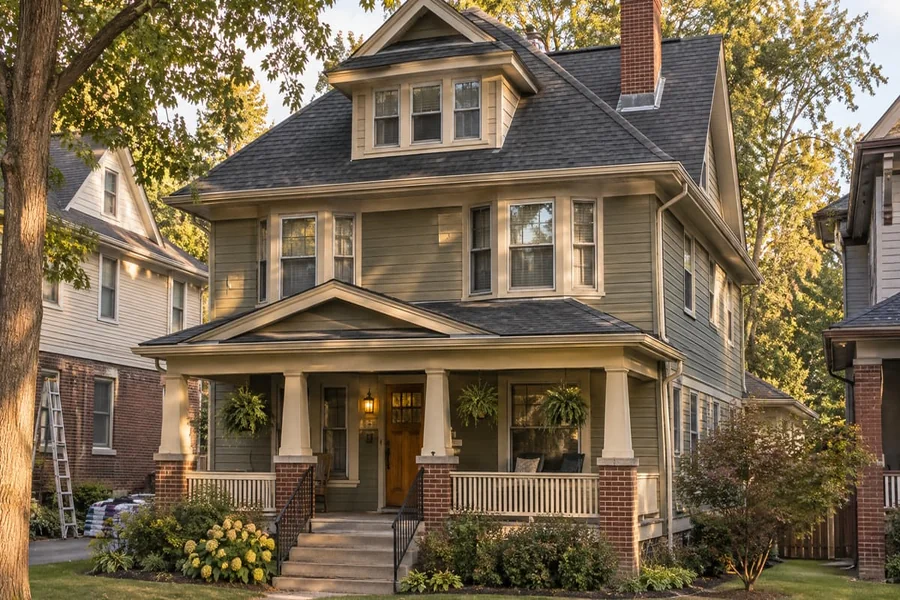
Akron’s older neighborhoods are full of houses with real character. You will find early-1900s foursquares and bungalows built during the city’s rubber-industry boom, along with rows of mid-century ranches and Cape Cods that went up after World War II. Many of these homes have been well cared for over the decades. Their roofs, though, often carry a long history of patches, re-roofs, and changes that are not obvious from the curb.
Replacing the roof on an older house is not quite the same job as roofing a newer build. The structure underneath was built to different standards, earlier roofers may have taken shortcuts, and the design itself can be more complex. Before you start getting quotes, it helps to understand what you might find. Browsing the hof roofing akron company page is one way to see how a local roofer approaches homes across Summit County, including older properties.
Here are the issues that come up most often.
Multiple Layers of Old Shingles
For decades, a common way to re-roof was to nail new shingles right over the old ones. On an older home, it is not unusual to find two layers, and sometimes more, including original wood shingles buried at the bottom.
Layering causes several problems:
– **Added weight** on rafters that were sized for a single roof covering
– **Uneven surfaces** that make new shingles lie poorly and age faster
– **Hidden damage**, since rot and leaks in the deck stay covered up
– **Code and warranty limits**, as many codes restrict the number of layers and manufacturers generally require installation over a sound, clean deck
For these reasons, a full tear-off down to the sheathing is usually the right call on an older home. It costs more labor up front, but it gives the crew a chance to see and fix what is underneath.
Plank Sheathing Instead of Plywood
Many homes built before the mid-20th century have roof decks made of individual wood boards, often called plank or board sheathing, rather than plywood sheets. Some were laid with gaps between boards, a method used for wood shingles so they could breathe.
Plank decking can be perfectly sound, but it raises questions:
– **Gaps** between boards may be too wide for modern asphalt shingles, which need a solid surface for proper nailing.
– **Old boards** may be split, dried out, or rotted in spots from past leaks.
– **Nail holding** can be weaker in brittle or deteriorated wood.
Roofers often handle this by replacing damaged boards and installing a layer of plywood or OSB over the existing planks. Ask how a contractor plans to deal with plank sheathing and how that work will be priced if it turns up.
Outdated or Missing Ventilation
Older homes were rarely designed with modern attic ventilation in mind. Some have a couple of small gable vents and little else. Others had soffits closed off during later renovations, or attic spaces that were partly finished into living areas.
Poor ventilation traps heat in summer and moisture in winter. In Northeast Ohio, that can contribute to ice dams along the eaves, frost on the underside of the deck, and shingles that wear out early. A roof replacement is the ideal time to evaluate airflow and add balanced intake and exhaust where the structure allows. On homes with finished attic rooms or tight rafter bays, this can take some creative planning.
Steep Pitches and Dormers
Foursquares, Tudors, and many early-1900s homes have steep roofs, often with dormers, multiple gables, and valleys. These details are a big part of what makes the houses attractive. They also make roofing more involved.
– **Steep slopes** require extra safety equipment and slow the work.
– **Dormers** create several wall-to-roof junctions, each needing step flashing and careful detailing.
– **Valleys** carry concentrated water and must be lined and shingled correctly.
– **Small, chopped-up roof sections** mean more cuts and more waste.
These areas are also where leaks tend to start on older roofs, so they deserve close attention in any proposal.
Preserving the Home’s Character
A new roof should suit the house. A few things to think about:
– **Shingle style and color.** Architectural shingles with a dimensional look often suit older homes well. Some premium lines mimic slate or wood shake for a more period-appropriate appearance.
– **Trim details.** Original rake boards, cornices, and decorative brackets should be protected during tear-off and repaired if needed.
– **Historic district rules.** If your home is in a designated historic district, there may be review requirements for exterior changes. Check with the city before you commit to materials.
Caution About Older Materials
Some roofing and siding products made before the 1980s contained asbestos, including certain cement-based shingles and some old felts and roof coatings. Asbestos is generally a hazard when it is disturbed and fibers become airborne.
If your home has old cement-like shingles, a heavy coated roof, or layers of unknown material, ask about testing before tear-off. In Ohio, removal of asbestos-containing materials can be subject to state and federal rules, and a licensed abatement contractor may be required. Do not scrape, break, or remove suspect materials yourself.
Lead is another consideration. Older flashing and paint on trim boards may contain lead, so dust control and cleanup matter.
Chimney Issues
Many older homes have brick chimneys that have been through decades of freeze-thaw cycles. Common problems include:
– Crumbling mortar joints and spalling bricks
– Cracked or missing crowns at the top
– Old flashing that was tarred over rather than properly replaced
– Chimneys that are no longer in use but still let water in
A roof replacement is a good time to have the chimney evaluated. Flashing should be replaced with new step and counter flashing, and masonry repairs are best done before the new roof goes on. If a chimney is no longer used, some homeowners choose to have it removed below the roofline, which eliminates a common leak point.
Choosing the Right Contractor for an Older Home
When you interview roofers, ask questions specific to older homes:
– How will you handle multiple layers and plank decking?
– How are decking repairs priced?
– What is your plan for improving ventilation?
– How will you protect trim, landscaping, and nearby windows?
– Have you worked on homes of a similar age and style?
Look for credentials such as manufacturer certifications and a clear workmanship warranty, and get the full scope in writing.
Protecting a Home Built to Last
Older Akron homes were often built with solid framing and good materials, which is why so many are still standing strong. A roof replacement done with care for the structure underneath can keep that house dry and comfortable for decades. Knowing what to expect before the work starts helps you plan for the surprises, ask the right questions, and end up with a roof that fits the home’s history.
